On this page
Uneven tire wear is often the first visible clue that a commercial truck is not tracking as intended. Alignment affects more than the steering wheel position: it influences tire life, handling and the way axles follow one another. Finding the cause early can prevent a new set of tires from developing the same pattern.
Read the wear pattern
Wear concentrated on one shoulder, feathered tread blocks or differences between tires on the same axle can justify an alignment inspection. Tire pressure, loading, suspension condition and worn components can also contribute, so alignment should not be treated as the automatic answer to every wear pattern.
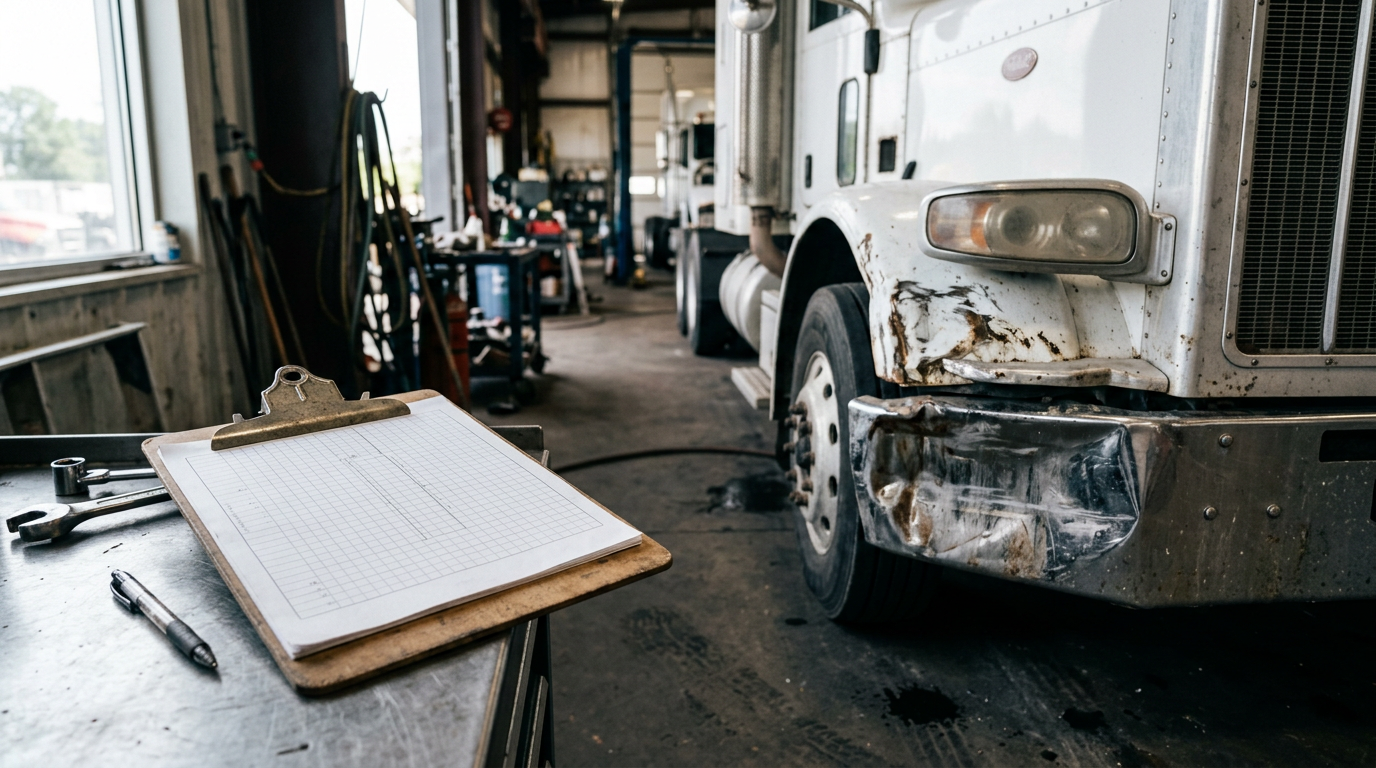
Note where the wear appears and how quickly it developed. A photograph and mileage record can help show progression. Do not wait until cords are visible or the tire is no longer serviceable.
Pay attention to handling
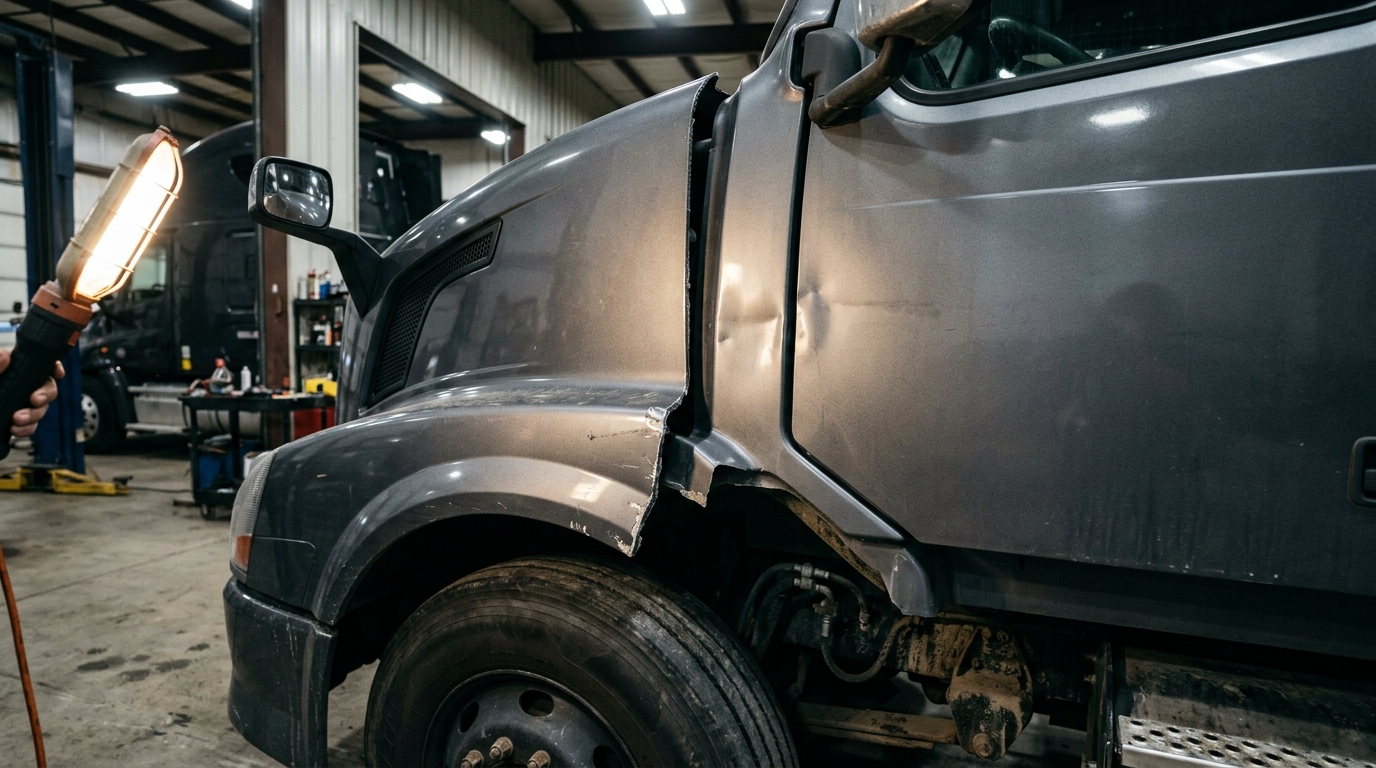
Pulling, wandering, dog-tracking and a steering wheel that no longer centers are common reasons to schedule an inspection. A recent collision, curb strike, suspension repair or frame repair can also make alignment measurement appropriate even before severe wear appears.
Front-end and axle alignment
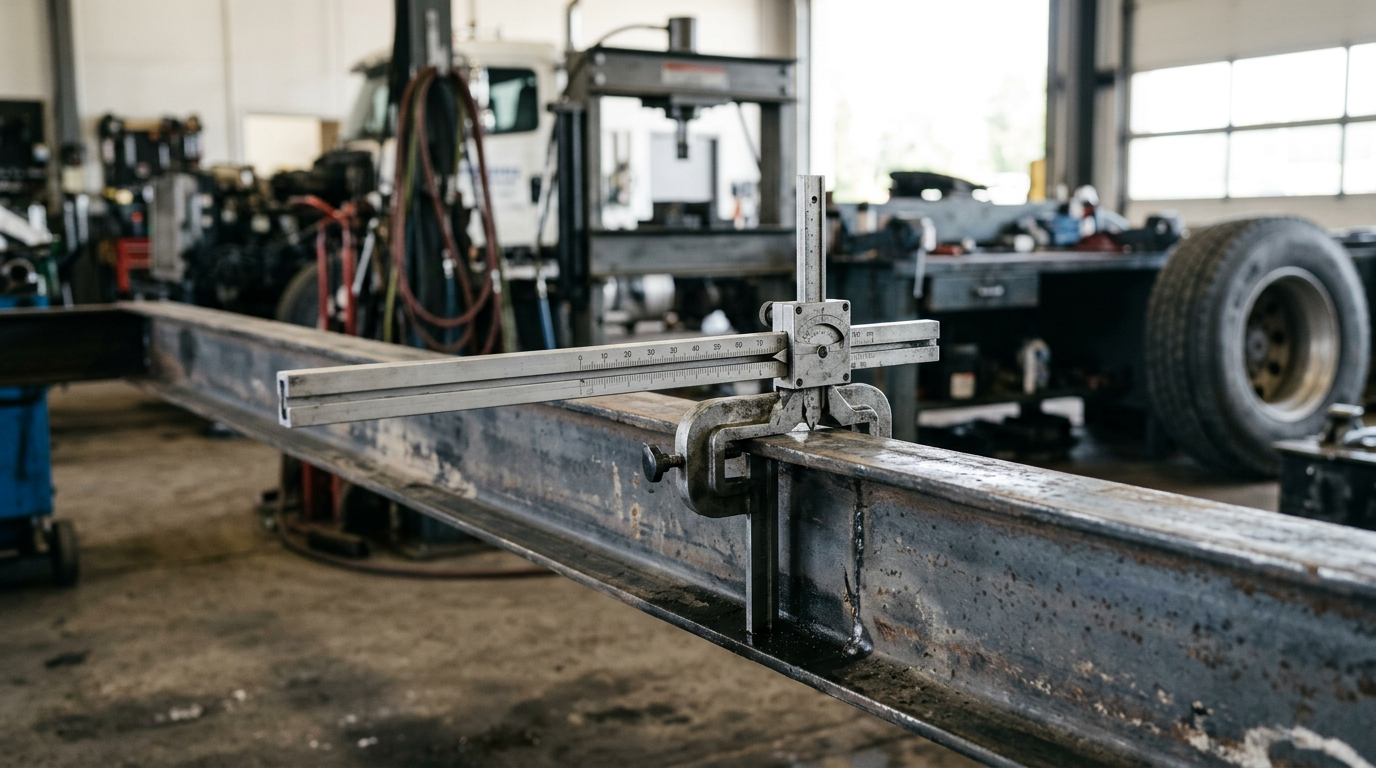
Front-end alignment addresses how the steer axle and wheels are positioned. Axle alignment considers how drive or trailer axles relate to the vehicle centerline and one another. A truck can need one, the other or a combination, depending on its symptoms and repair history.
Truck Collision Services performs front-end and axle alignment in-house. The capability was added with the frame and alignment expansion in 1999, allowing these checks to remain connected to collision and structural repair when needed.
Before the appointment
Bring notes about tire age, pressure practices, recent suspension work and when the symptom occurs. Mention whether the truck behaves differently loaded and unloaded. The inspection can then consider the pattern rather than a single observation.
Alignment correction should be followed by continued tire monitoring. Existing irregular wear will not reverse, but a stable pattern after service can help confirm that the underlying condition was addressed. Explore front end alignments and axle alignments, or contact the Lansing shop for an estimate.
Written by